Friday, May 20, 2016

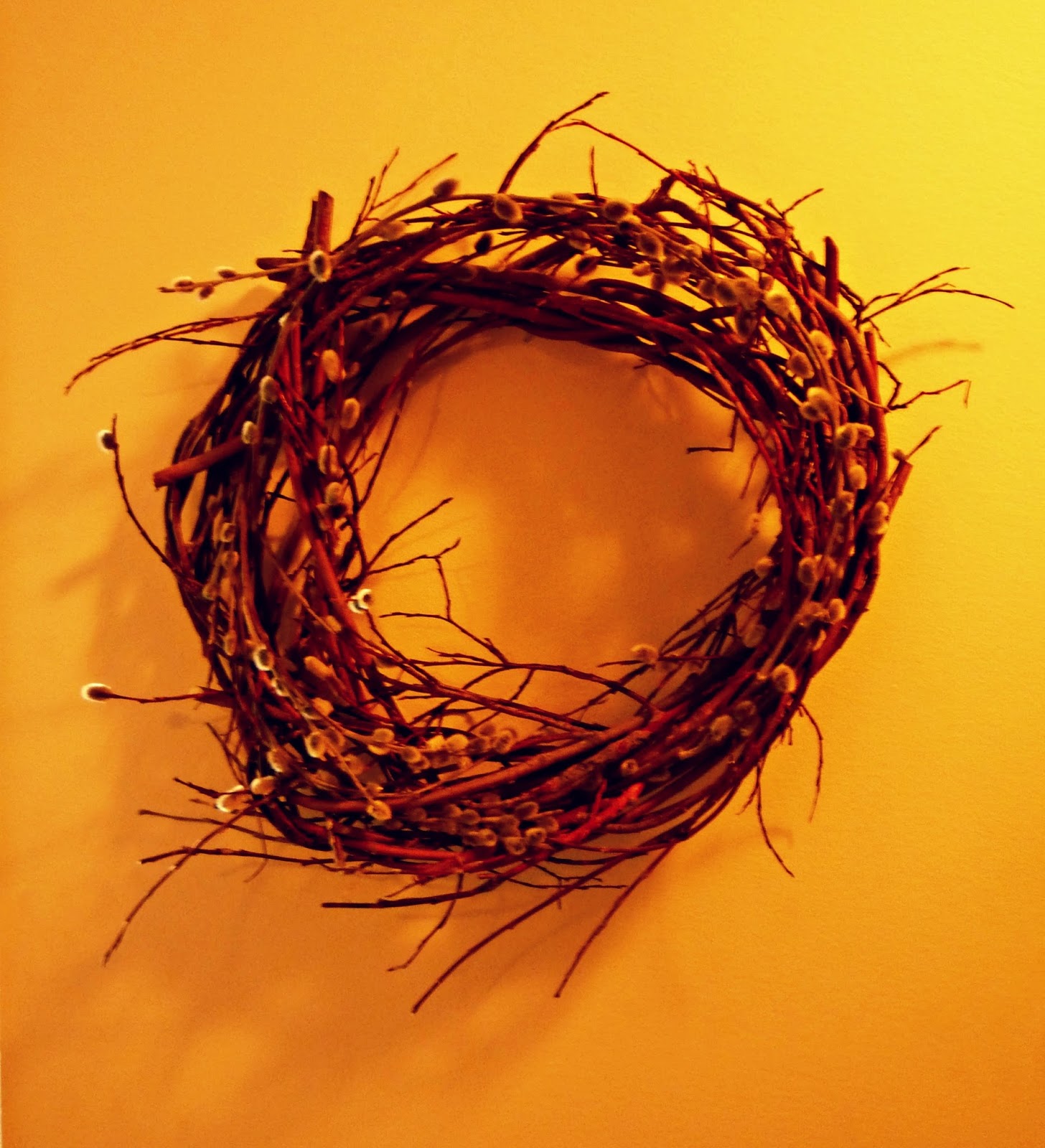
Willow Wreath


We went exploring in the JEEP and found a road that is completely surrounded by willows. Willows will be an important part of life on our homestead as we plan to coppice willow for heat and cooking and I hope to weave willows into fences and baskets for functional use around the property. I decided to explore willows so we purchased some shears and went back the next day.

This unequal wreath was surprisingly easy to put together as willows are remarkably pliable!


Friday, May 6, 2016

DIY Reclaimed Wood Bench with Manual Hand Tools!

Construction skills are going to be an important part of life on the good ole homestead and my history with successful woodworking includes a failed MDF shelf project and a hammer that was used exclusively for hanging artwork so I really needed to improve my prowess with a hammer and nails.

We needed a bench for the front entryway of our apartment so I decided to give it a go!  


There is a well-established scavenging culture here in Yellowknife so I was able to get the majority of the wood for this project from free pallets. Free wood reduced the stress level of this project a lot because if it didn't work out I had not wasted money but only time. 


I decided to use manual hand tools (hammer, saw, sandpaper) instead of purchasing electric hand tools because the upfront costs of those tools is great and because we will be off-grid on the farm so I want to reduce my reliance on electricity for these types of projects. Manual hand tools are time and labour intensive but they are safer than electric tools. 


The bench turned out surprisingly sturdy which I think was due to the over-kill support but this bench can hold my husband and I and seems to be very stable! A success all around!  


I posted a lot of photo updates of the project on my instagram and I'll be including rough plans in the 2016 edition of Almanac 84

Friday, April 29, 2016

Bread Baking Day: Tips

Many moons ago I volunteered and then worked for an artisan sourdough bread business in Toronto. I really feel in love with bread - I loved everything about that time. The smell. The feel. The taste. The way I'd smell of fresh baked bread and sweat on the subway ride home after an exhausting 12 hour shift. It was really wonderful.

After I moved on from that job, I grew my own sourdough starter and started baking at a home scale on a regular basis but I soon simply stopped baking bread. We usually did not purchase bread so I wasn't stressing over the lack of freshly baked bread in the house. However, since moving to Yellowknife we've been purchasing three loaves of bread every week or so. We get a nice full grain one for sandwiches, a sweet one for the toaster oven, and usually some bagels because really... bagels!

So I've decided to take the plunge again and start baking bread on a regular basis.


1. Pick a casual day to become the regular bread baking day. It usually takes a few hours to go from yeast and flour to fully baked bread so it's best to plan bread baking for a day usually spent in a casual manner. This is especially important for me as I don't like to leave the house while I have bread rising or proofing - I'm just a bit overprotective of my dough!

2. Start small. Don't worry about replacing all of the family's bread intake immediately. Focus on slowing reducing purchased bread while increasing home made bread.

3. Read. Take bread books out of the library. There are a plethora of bread baking books with various techniques and advice (sometimes contradictory) and combined they offer a great resource.

4. Experiment. Don't just make plain white sandwich bread. Experiment with various traditional and unusual recipes. Experiment with pan shapes and free-form loaves.

5. Pantry Staples. After a few weeks of bread baking you'll know what times of grains, flours, and additives you need to keep in your pantry. Keep your pantry stocked with these items so that you can easily bake family favourites as well as experimenting with recipe variations.

6. Leftovers. On occasion, not all of your glorious home made bread will be consumed before it becomes hard so develop a few recipes that use up bread crumbs and stale bread (stuffing!)
Friday, April 22, 2016

Quilting: Hexagons


I recently became obsessed with hexagons due mostly to Wild Olive's love of them and in the summer of 2015 I started what I'm sure will be a 10 year endeavour. I want to make a diamond hexagon king sized quilt that I intend to hand quilt. The hexagons are 2 inches point to point and each of these motifs takes 25 individual hexagons. Thus far I have finished 21 diamond motifs although I might omit one of them - as the colours are too bright in comparison to the rest of the colours and patterns. Each motif takes me 2 hours to hand stitch together - after I have already basted the fabric around a paper hexagon so this really might take me 10 years to finish.

The motif on the left is the one I might end up omitting from the quilt as it doesn't quite match the colour 'style' of the rest of the diamonds. I really love the motif on the right.
Total: 21 motifs completed

Friday, April 15, 2016

Banana Bread


I have scores of cookbooks that contain beautiful and delicious sounding recipes for desserts but I don't ever make them. Why not? Because I never plan my baking encounters and so never shop with a specific dessert recipe in mind. This means that I need to develop a series of recipes that contain pantry staples to quell that late night desire to bake (and consume) something sweet. And the first instalment is a basic, pantry-friendly, vegan banana bread!

Basic Banana Bread

1/4 cup vegetable shortening
3 medium bananas
1/2 cup sugar

1  1/3 cup flour
2 1/2 teaspoons baking powder
1/2 teaspoon baking soda

Preheat oven to 375 C and lightly oil a loaf pan.
Mix together shortening, bananas, and sugar until well combined. This is easily done in a stand mixer.
Add in flour, baking powder, and baking soda. Fold together by hand until no dry flour remains. The batter will be quite dry and stiff.
Put batter into loaf pan and arrange in an even layer.
Bake for 40 minutes.

Chocolate Banana Bread: Replace 1/3 of the flour with cocoa powder.

Friday, April 1, 2016

Garden Planning: Selecting Seeds


I just received word that I get to garden in a community garden plot this summer! This is good news because I really need to improve my green thumb before we move to the land. I have picked a few things to grow and put in a few seed orders. Here are the guiding principles I used to plan my garden - which I thought might be helpful to other new gardeners. 

1. Stick to one seed company. Seed catalogues are so fun to receive and look through but actually choosing and ordering seeds from all those companies can get overwhelming and expensive. I chose to order from Heritage Harvest because I like their business practices, they are a Canadian company, and their print catalogue had choices without being overwhelming. 

2. Grow what you want to eat. For some reason gardeners are obsessed with tomatoes but I really don't enjoy eating tomatoes so I avoided that category. I did however choose two types of beets and multiple herbs for my little garden.

3. Food experiments. I choose some plants with the intention of experimenting with the harvest. For example, nasturtiums will be made into capers and I really want to dry chamomile flowers to be used in teas. As a foodie, goals of this type are important as these experiments will help ensure long term interest in the garden. 
  
4. Keep it simple. Once you start browsing seed catalogues and pinterest for gardening ideas there will be more ideas than you can accomplish in any one growing season. This is true of all gardeners but its beneficial for newbies to keep the garden plan simple. 

5. Define success before you start. This year my definition of success is 'if one plant grew in my plot then I had a successful gardening year'. I don't have to harvest anything. I don't have to eat a single meal made of homegrown vegetables. If my raised bed has one green plant that I intentionally planted in it at any point in the season then my gardening year was a success.